
Aluminium Ingot Supplier: ADC12, A7, A8, 6063 and Lead Ingots
Primary and alloy aluminium ingots for die casting, extrusion and remelting, plus high-purity lead ingots for batteries and shielding, sourced from Chinese producers to your chemistry, inspected before loading and exported from Shanghai with the documents your customs broker needs.
Strongmac is an aluminium ingot supplier and exporter based in Shanghai. We source non-ferrous metal ingots for foundries, die casters, extruders, alloy producers, battery makers and metal traders, and ship them to buyers in Asia, Africa, Europe, the USA, Canada and Australia. The range covers A7 and A8 primary aluminium, ADC12 die-casting alloy, 6063 extrusion alloy and electrolytic lead ingots. Typical buyers include automotive and appliance die casters, extrusion plants, secondary smelters, battery and shielding manufacturers, and distributors who resell ingots into local foundry markets.
Ingots look alike on a pallet, but they behave very differently in a furnace. An alloy with too much iron or copper can cause porosity, cracking or rejected castings, and a lead lot with the wrong impurity profile can shorten battery life. So we start with chemistry rather than with a product name. Our in-house engineers help you set the grade, the composition limits that matter for your process, the ingot form and weight, and the documents your quality team will ask for. Product titles on this site list purity grades such as 99.7%, 99.8% or 99.9%; treat these as grade descriptions and confirm the exact limits for your order in the quotation.
From there we follow the same routine on every order: specify, source, check, ship. Before loading, lots go through pre-shipment inspection of markings, bundle count, weight, surface condition and paperwork. You can attend, join by video or appoint a third-party agency to draw samples and run its own analysis. Our export team then prepares shipping documents and books freight, so an aluminium ingot exporter you can reach directly also handles the logistics end to end. Ingots leave in strapped bundles with lot marks, so your team can match each bundle to its paperwork.
Explore the full ingots and raw materials range, or pair it with related lines: steel pipe, plate and stainless for fabrication projects and heat treatment and melting furnaces for plants that process metals. Send grade, tonnage and destination port through the quote request form. We reply with a quotation that sets out price, lead time and shipping.
Aluminium ingot grades: A7, A8, ADC12 and 6063
Aluminium ingots fall into two broad groups. Primary, largely unalloyed ingots such as A7 aluminium ingots and A8 aluminium ingots are Chinese designations generally associated with aluminium content of about 99.7% and 99.8%. They are used for remelting, alloy making, wire, foil and deoxidation in steelmaking.
Alloy ingots are made to a set composition for a specific process. ADC12 aluminium alloy ingots follow a Japanese die-casting designation in the aluminium-silicon-copper family, valued for fluidity in thin-walled castings such as housings, brackets and engine parts. 6063 aluminium ingots belong to the aluminium-magnesium-silicon family used for extruded profiles, window frames and heat sinks.
Ingots may be primary metal or secondary (recycled) metal. Secondary ADC12 is common and cost-effective, but impurity control varies more between producers. When comparing offers, look at the full chemistry table, especially iron, silicon, copper, zinc and magnesium limits, plus ingot weight, bundle size, surface cleanliness and freedom from dross or moisture, which matters for safe charging into a molten bath. Several listings combine grades in one title, for example ADC12 with A7 or 6063, so the grade for your order is fixed in the quotation rather than by the listing name.
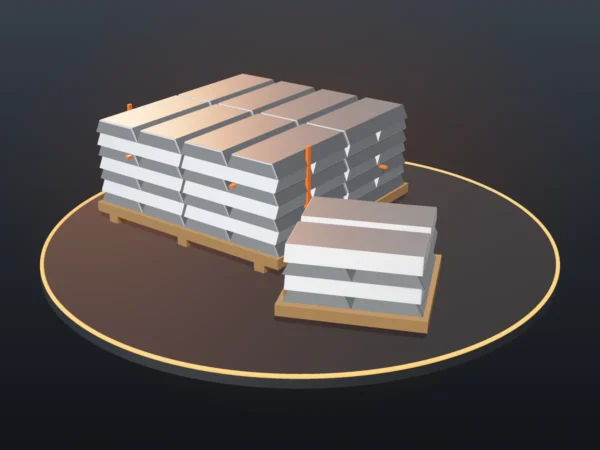
Lead ingot supplier for battery, shielding and alloy use
Lead remains a core raw material because it is dense, easy to cast, corrosion resistant and effective at blocking radiation. As a lead ingot supplier, we offer high-purity electrolytic grades for battery production and refined grades for shielding and alloying.
Electrolytic lead ingots at 99.994% are the type most often specified for lead-acid battery oxide and grid alloys, where trace elements such as bismuth, silver, copper and antimony affect battery performance. A 99.95% purity lead ingot can suit cable sheathing, solder, weights and general casting. For medical, laboratory and industrial X-ray rooms, lead ingots for radiation shielding are cast or rolled into bricks, sheet and lining.
When comparing offers, check the minimum lead content and the maximum limits for each impurity, ingot weight and shape, how the ingots are strapped into bundles, and the marking on each lot. Because lead is so dense, a container reaches its weight limit long before it is full, so plan order quantities by weight rather than by volume. Lead is also a regulated material in many countries, so confirm local import rules, labeling and handling requirements before you order, and include them in your enquiry.
How to choose an aluminium ingot supplier and grade
Match grade to process
Begin with what happens to the metal next. Die casters typically need an Al-Si-Cu alloy like ADC12, extruders need 6063 composition, and remelters or alloy producers usually want primary A7 or A8. Buying a cheaper grade than the process needs often costs more later through scrap, porosity and furnace corrections, so state the end use clearly in your enquiry, including casting method and part type.
Read the chemistry, not the title
Product titles in this market are long and keyword-heavy, and the purity figure alone says little. Ask for the full composition with maximum limits for each element, such as iron, silicon, copper, zinc, magnesium and manganese for aluminium, or bismuth, silver and copper for lead. Compare offers on that table, and write the limits into your purchase order so they become the acceptance criteria for each lot.
Primary or secondary metal
Primary ingots are smelted from alumina; secondary ingots are produced from recycled scrap. Both have a place. Secondary alloys such as ADC12 are widely used and economical, but batch-to-batch consistency depends on scrap sorting and refining. If your castings are safety-critical or cosmetic, say whether secondary metal is acceptable and how much variation you can tolerate between deliveries, so the producer can be matched to your needs.
Ingot form and packing
Confirm the ingot weight, shape and how many ingots go into each strapped bundle. Bundle weight affects forklift handling, container loading and how quickly you can charge furnaces. Ask for clean, dry ingots with legible lot marks, because moisture or surface contamination can be a serious safety hazard when ingots are added to molten metal, so pre-drying should not be the only safeguard.
Sampling and inspection
Decide how each lot will be verified. Options include a producer chemical analysis report, independent sampling and testing by a third-party agency you appoint, or both. Our pre-shipment inspection checks markings, bundle count, weights and paperwork, and you can attend or watch by video. Agree the sampling method and the laboratory before loading, not after the goods arrive at your plant.
Price basis and terms
Metal prices move with commodity markets, so quotations are normally valid for a short period. Ask how the price is set, what it includes (packing, inland transport, freight, insurance) and what Incoterm applies. Comparing quotes on the same delivery basis and the same chemistry limits is the only reliable way to see which offer is cheaper once the metal reaches your plant.
Where aluminium and lead ingots are used
Automotive and die casting
Foundries melt ADC12 and similar alloys to cast gearbox housings, engine brackets, motor covers, pump bodies and electronics enclosures. High fluidity lets molten metal fill thin walls and fine detail, which keeps machining to a minimum on high-volume parts produced for car, motorcycle and appliance makers.
Extrusion and building products
6063 composition aluminium is cast into billet and extruded into window and door frames, curtain wall sections, rails, solar mounting profiles and heat sinks. It takes anodizing well and gives a clean surface finish on architectural profiles, furniture trims and consumer goods.
Remelting and alloy production
Primary A7 and A8 ingots serve as base metal for secondary smelters and master alloy producers, who adjust silicon, copper or magnesium to make their own grades. Steel plants also use aluminium as a deoxidizer during steelmaking, adding it to the ladle to remove dissolved oxygen.
Lead-acid batteries
Battery plants convert high-purity electrolytic lead into lead oxide for the active paste and alloy it with calcium or antimony for grids. Controlling impurities helps reduce self-discharge and extends battery life in automotive, motorcycle, forklift, telecom and standby power uses.
Radiation shielding
Hospitals, dental clinics, laboratories and industrial radiography sites use lead as bricks, sheet and lining for walls, doors and containers. Its density makes it an efficient barrier against X-rays and gamma radiation in a compact thickness, where space for thick concrete walls is limited.
Cable, solder and castings
Lead is used for cable sheathing, solder alloys, counterweights, ballast and corrosion-resistant linings in chemical plants. Aluminium ingots also feed wire rod, foil and deoxidation uses, making these ingots staple inputs for many manufacturing chains in both developed and emerging markets.
Browse the product categories
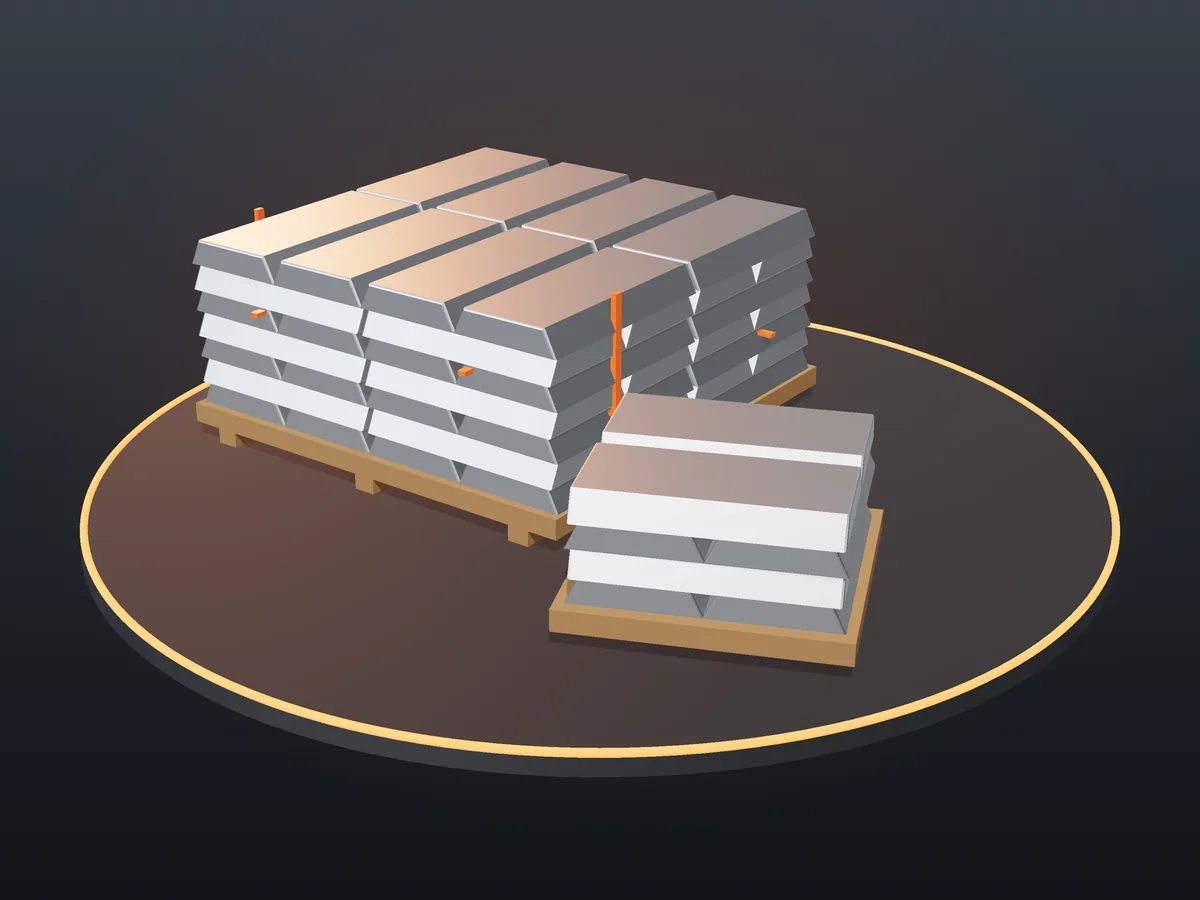
Ingots & Raw Materials questions
Do you produce the ingots yourselves?
No. Strongmac is a Shanghai-based supplier and exporter, not a smelter. We source aluminium and lead ingots from producers in China that can meet the grade and chemistry you specify, then coordinate inspection, documents and shipping. That lets you deal with one contact for specification, quality checks and logistics, instead of managing several producers and forwarders yourself. Our in-house engineers also review your specification before sourcing begins, so gaps are caught early.
What do A7 and A8 mean?
A7 and A8 are Chinese grade designations for primary aluminium ingots. A7 is generally associated with about 99.7% aluminium content and A8 with about 99.8%, with defined limits for impurities such as iron and silicon. Always confirm the exact composition limits in the quotation, because the letters alone do not tell you every element your process may be sensitive to. If your plant works to a European or American designation, share it and we will match the closest grade.
What is ADC12 aluminium ingot used for?
ADC12 is a Japanese designation for an aluminium-silicon-copper die-casting alloy. It flows well into thin-walled molds and gives good dimensional stability, so it is widely used for automotive housings, motor and pump parts, power tools and electronics casings. Equivalent grades exist under other national standards, and your foundry engineer should confirm which composition table to order against. Secondary ADC12 is common, so state whether recycled metal is acceptable for your parts and what iron limit you need.
Do the purity figures in product titles guarantee the composition?
No. Purity figures such as 99.7% or 99.9% in product titles describe the grade being offered, not a guarantee for a specific shipment. The composition for your order is defined in the quotation and purchase order. We recommend writing element-by-element limits into the contract and agreeing how each lot will be sampled and analyzed before it is loaded. That way the contract, not the product title, governs what you receive, and disputes are far easier to resolve.
Can a third party test the ingots before shipment?
Yes. Every order goes through pre-shipment inspection covering markings, bundle counts, weights and documents. You can attend in person, join by live video, or appoint an independent inspection agency to take samples and run chemical analysis. Agree the sampling plan in advance so the results can be used to release the lot. If results fall outside the agreed limits, the issue is raised and settled before the goods leave China.
Which lead grade should I buy for batteries?
Battery makers generally specify high-purity electrolytic lead, often 99.99% or higher, with tight limits on bismuth, silver, copper and antimony. Grid alloys and oxide production can have different requirements, so share your internal specification. We will source to those limits and confirm in the quotation which composition the producer can supply for that order. Recycled lead is offered in some markets, so say whether it is acceptable and which tests you will use to accept each lot.
How are ingots packed and shipped?
Ingots are usually stacked and strapped into bundles that a forklift can handle, then loaded into containers with weight spread evenly across the floor. Ask us for bundle weight and marking options that suit your receiving plant and forklift capacity. Our shipping and export logistics team books freight and prepares export documents for buyers in Asia, Africa, Europe, North America and Australia, including the papers your customs broker needs to clear the cargo.
What should I include in my ingot enquiry?
Tell us the metal and grade, the composition limits you need, ingot weight or form, monthly or total tonnage, delivery port, preferred Incoterm and the documents your quality team requires. A copy of your internal material specification is ideal. Send it through the quote request form and we will reply with price, lead time and shipping. If anything in the specification is unclear, our engineers will ask before quoting.

Let’s spec
your next
project.
Send your requirement — our engineers reply with the right equipment, pricing and lead time.